
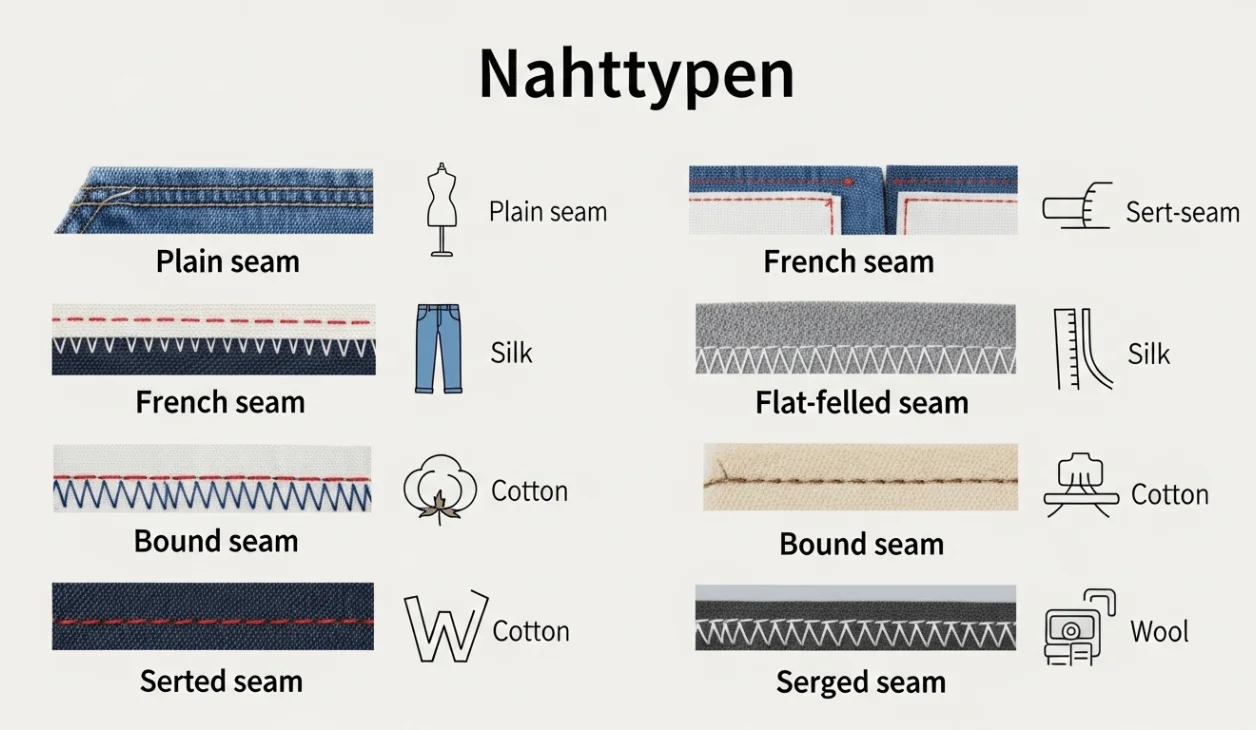
Nahttypen: Essential Sewing Seams for Garment Construction
Nahttypen is a term commonly used to describe different types of sewing seams that join pieces of fabric together. These seams play a crucial role in garment construction, home textiles, and industrial fabric production. Choosing the correct seam not only improves durability but also enhances comfort and overall appearance. In this article, we will explore seam types in detail, their practical applications, and how to select the right option for different fabrics and purposes.
What Are Nahttypen?
Nahttypen refer to the various methods used to connect two or more fabric pieces through stitching. Each seam type has its own structure, strength, and visual impact. While some seams are designed for heavy-duty use, others focus on flexibility or decorative appeal. Therefore, understanding seam varieties is essential for achieving professional and long-lasting results in sewing projects.
Why Seam Selection Matters
The choice of seam has a direct impact on the quality and lifespan of a textile product. A poorly chosen seam can cause fabric to tear, stretch unevenly, or feel uncomfortable against the skin. On the other hand, the right seam improves strength, supports movement, and ensures a polished finish. Especially in fashion and textile manufacturing, seam quality is often a key indicator of craftsmanship.
Commonly Used Seam Types Explained
Below are some of the most widely used seams in both home sewing and industrial production.
1. Plain Seam (Straight Stitch Seam)
The plain seam is one of the most basic and frequently used seam types. It involves stitching two fabric pieces together with the right sides facing each other. After sewing, the seam allowances are pressed open or to one side. This seam is versatile and suitable for a wide range of garments and fabric types.
2. French Seam
French seams are ideal for lightweight or sheer fabrics such as chiffon and silk. This seam fully encloses the raw edges, creating a clean and elegant interior finish. As a result, garments look more refined and are less likely to fray over time.
3. Flat-Felled Seam
Commonly seen in jeans and workwear, the flat-felled seam is extremely durable. It involves folding one seam allowance over the other and stitching it down securely. Because of its strength, this seam is perfect for areas exposed to stress and frequent movement.
4. Overlock Seam
An overlock seam is typically created using a specialized overlock or serger machine. It trims, stitches, and finishes fabric edges in one step. This seam is particularly useful for knit and stretch fabrics, as it allows elasticity while preventing fraying.
5. Blind Hem Seam
The blind hem seam is mainly used for hemming garments. It is barely visible from the outside, making it ideal for dress pants, skirts, and formal wear. This technique provides a neat and professional appearance without visible stitching lines.
Nahttypen Based on Function
Seams can also be categorized by their function rather than appearance. Some seams are designed primarily for construction, while others reinforce stress points or serve decorative purposes. For example, reinforcement seams are often added at shoulders, armholes, or crotch areas to improve durability. Decorative seams, however, are intentionally visible and contribute to the garment’s design.
Choosing the Right Seam for Different Fabrics
Fabric type plays a major role when selecting appropriate seam techniques. Heavy fabrics like denim or canvas require strong seams that can handle tension. Lightweight fabrics benefit from enclosed seams that protect delicate fibers. Stretch fabrics need seams that can move with the material without breaking. Considering these factors together ensures both comfort and longevity.
Common Mistakes When Selecting Seams
One common mistake is choosing a seam based only on appearance. While aesthetics matter, functionality should always come first. Another frequent issue is ignoring seam allowance width, which can lead to puckering or fabric strain. However, these problems can easily be avoided with careful planning and testing.
Tips for Clean and Long-Lasting Seams
Using high-quality thread and the correct needle for the fabric type greatly improves seam performance. Additionally, pressing seams after stitching is an often-overlooked step that significantly enhances the final look. Testing seams on scrap fabric before starting a project also helps identify the best technique and stitch settings.
Industrial vs. Home Sewing Applications
In industrial settings, seam consistency and speed are critical. Machines are often calibrated for specific seam types to ensure uniform results. In contrast, home sewing allows more flexibility and creativity, making it easier to experiment with different seam styles. Nevertheless, understanding professional techniques can greatly improve home sewing outcomes.
Conclusion
Nahttypen are more than just a technical detail in sewing—they are a foundation of quality, durability, and design. By understanding different seam types and their applications, sewists can make informed choices that elevate their projects. Whether working on casual clothing, formal wear, or heavy-duty textiles, the right seam makes all the difference and ensures a polished, professional result.